The Art of Mastery: How Kanji Practice Paper Elevates Creative and Educational Publishing
In the dynamic world of digital publishing and self-publishing platforms like Amazon KDP, the success of a product hinges not just on its core content, but on the quality of its presentation and the user experience it facilitates. For creators focusing on language learning, calligraphy, or cultural arts, the interior design of a workbook is a critical component of its value. This is where specialized tools like Kanji Practice Paper for KDP Interiors become indispensable, transforming a simple idea into a professional, market-ready product.
Beyond Blank Pages: Defining a Purposeful Publishing Asset
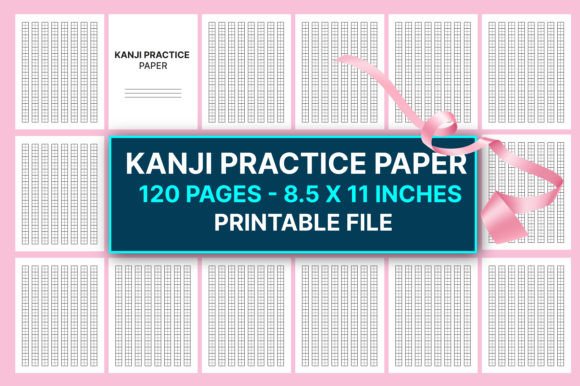
Kanji Practice Paper for KDP Interiors is not merely a digital file of lined paper. It is a meticulously crafted, print-ready PDF template specifically designed for authors and creators publishing Kanji practice workbooks, journals, or calligraphy guides on Amazon’s Kindle Direct Publishing platform. Each sheet is structured with the precise grid layouts essential for practicing Japanese characters, respecting the spatial balance and stroke order that Kanji mastery requires. The product delivers a complete, professional interior package, eliminating the technical hurdles of design and file preparation for the publisher.
The offering typically includes a high-quality, print-ready PDF file encompassing 120 pages formatted to the standard KDP trim size of 8.5 x 11 inches. Crucially, it is built without a bleed area and is tested for KDP’s specifications, using CMYK color mode at 300 PPI (pixels per inch) to ensure sharp, clear prints that meet Amazon’s stringent quality standards. This attention to technical detail guarantees that the final physical book maintains the integrity of the practice grids, providing a superior tactile experience for the end user.
Alignment with Macro Trends in Creative Entrepreneurship and Education
The relevance of such a specialized product is amplified by several converging trends. Firstly, the global surge in self-publishing and micro-entrepreneurship empowers individuals to turn niche expertise into products. Secondly, there is a sustained, growing interest in language learning and mindfulness practices tied to cultural arts like calligraphy. Finally, consumer expectations for physical goods—even educational workbooks—have risen; amateurish formatting and poor print quality are immediate rejections in a competitive marketplace.
Kanji Practice Paper for KDP Interiors sits at the intersection of these developments. It enables a language instructor, a calligraphy enthusiast, or a cultural content creator to swiftly enter the market with a product that looks and feels authoritative. It democratizes professional-grade design, allowing the creator to focus on their pedagogical content or artistic guidance rather than struggling with graphic design software and print technicalities. This reflects a broader shift in creative workflows: leveraging specialized, ready-to-use assets to streamline production and enhance quality.
The Changing Needs of Creators and Learners
The needs of both publishers and end-users have evolved. Creators, often experts in their field but not in graphic design or print logistics, seek solutions that reduce time-to-market and technical risk. They require assets that are guaranteed to pass KDP’s automated and manual review processes, avoiding frustrating rejections and delays. A product that is explicitly “KDP Tested” provides that confidence, addressing a core operational need.
For learners and practitioners, the physical experience of practice is paramount. Kanji study is a disciplined, repetitive art that benefits from consistency and clarity on the page. A poorly formatted grid—with misaligned lines, faint printing, or incorrect spacing—can hinder progress and cause frustration. Therefore, the end consumer implicitly judges the book’s interior quality. A workbook utilizing a professionally designed Kanji Practice Paper for KDP Interiors signals care and credibility, increasing its perceived value and effectiveness.
Practical Applications and Market Observations
The utility of this interior template extends across multiple product types. An obvious application is a standalone practice workbook, where the pages are the primary product. However, savvy creators also integrate these pages into larger guides. For instance, a comprehensive “Introduction to Japanese Writing” book might couple instructional chapters with dedicated practice sections using these grids. A calligraphy art book could include blank practice pages for readers to replicate shown techniques.
From a market perspective, books with clearly organized, high-quality practice space often receive positive reviews highlighting the book’s “usability” and “quality of paper layout.” This directly impacts sales and rankings. In a marketplace where the “Look Inside” feature allows potential buyers to inspect the interior, a polished, properly formatted layout makes a decisive first impression compared to a product with irregular, self-made grids.
Furthermore, the specification of 120 pages offers a substantial product volume that meets market expectations for a workbook, providing ample practice material without being sparse or overwhelming. The 8.5 x 11 inch size is both standard for US markets and offers a generous writing area, superior to smaller notebook sizes.
Connecting to Larger Developments in Print-On-Demand Technology
The existence and importance of such niche interior templates underscore the maturation of the print-on-demand (POD) ecosystem. Platforms like KDP have moved beyond simply accepting uploaded manuscripts. An entire support economy—covering design, formatting, and market-specific assets—has emerged to optimize outcomes. Kanji Practice Paper for KDP Interiors is a prime example of this ecosystem serving a specialized vertical.
This also reflects a technological shift where the value is in the digital asset that perfectly interfaces with a global print-and-distribution system. The creator purchases not a physical product, but a certified digital blueprint that reliably manifests as a high-quality physical product anywhere in the world through Amazon’s fulfillment. This model aligns perfectly with global, digital-first creative businesses.
Why This Focus on Quality Matters Now
In an increasingly crowded self-publishing space, differentiation is key. Generic content wrapped in a generic format struggles to gain traction. Products that serve a specific need with unwavering quality stand out. For the growing audience engaged in Japanese language study or mindful calligraphy practice, the tools they use are part of the learning ritual. A well-crafted book, starting with its interior paper design, enhances that ritual.
For the creator, using a ready-made, high-quality interior like Kanji Practice Paper for KDP Interiors represents a strategic investment. It minimizes production overhead, ensures compliance with distribution platform rules, and elevates the final product to professional standards. This allows the entrepreneur to allocate more resources to content development, marketing, and building a series of products—perhaps following the creator’s profile for new, related offerings.
Ultimately, the attention paid to such a specialized resource highlights a fundamental principle in modern digital publishing: success is found in the marriage of exceptional content and exceptional presentation. Whether for professionals building a publishing business, educators disseminating knowledge, or enthusiasts sharing an art, the foundation of that presentation often starts on the page—and with the right paper.