The Creative and Commercial Potential of Digital Coloring Resources
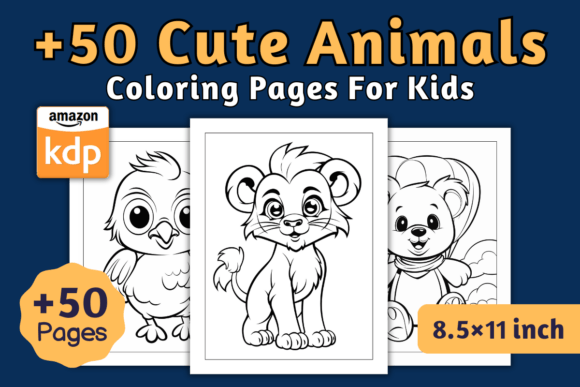
In the intersection of digital content creation and tangible creative expression, a specific product category has emerged as both a practical tool and a reflection of broader trends. The offer of 50 Cute Animals Coloring Pages for Kids as a high-quality KDP interior represents more than just a collection of images; it signifies a streamlined pathway for creators to participate in the thriving market of children's activity books. This digital asset, delivered as a .zip file containing 51 black and white, 8.5x11 inch, high-resolution JPG files, encapsulates a modern approach to publishing where agility and quality are paramount.
From Digital File to Physical Product: Understanding the KDP Interior
The core product is a professionally designed digital interior ready for integration. Unlike traditional publishing workflows that require extensive graphic design from scratch, these resources provide a complete, cohesive set. Each page, featuring charming illustrations of lions, horses, dogs, cats, sheep, and other farm or cute animals, is formatted to the standard print dimensions. This eliminates technical hurdles around resolution, sizing, and consistency, which are critical for producing a physical coloring book that meets consumer expectations for clarity and print quality.
The model of an "Instant Download – No Physical Item" delivery aligns perfectly with the digital-first economy. It empowers entrepreneurs, freelancers, and enthusiasts by providing the raw creative material while they control the branding, marketing, and business logistics. This separation of content creation from product fulfillment is a key development in creative industries, allowing for specialization and scalability.
Alignment with Market and Consumer Trends
The relevance of cute animals coloring pages for kids extends into several observable trends. Firstly, the demand for children's educational and recreational activities that are screen-free yet easily accessible remains strong. Coloring books offer a tactile, creative experience that parents value. Secondly, the growth of the self-publishing platform Amazon KDP has created a vast ecosystem of micro-publishers. These individuals seek efficient, professional-grade resources to build their catalog without the overhead of a full design team.
The thematic focus on cute animals taps into a perennial preference. Animal themes are universally appealing, non-controversial, and encourage learning about nature. A collection boasting 50 distinct pages provides variety, which is a crucial selling point for keeping children engaged and for the perceived value of a coloring book. This moves beyond a generic feature list into the psychology of product development: depth and cohesion matter.
The Workflow Transformation for Creators
For professionals and marketers exploring KDP, the workflow has fundamentally changed. Previously, creating a coloring book for KDP required either significant artistic skill or the capital to commission an illustrator. Now, with curated interiors available, the workflow shifts to curation, assembly, and marketing. This reflects a larger development across digital marketplaces: the rise of the curator-creator. Their expertise lies in understanding market niches, packaging, and customer outreach, rather than in asset creation itself.
Practical examples of this are evident. A freelancer might combine this animals coloring book interior with a separately sourced cover template, apply targeted keywords like "coloring pages for kids" or "farm animal coloring," and launch a product within days. This agility allows for rapid testing of markets and themes, a approach impossible under traditional publishing timelines.
Why This Model Garners Attention
The attention from creators stems from its alignment with a pragmatic, low-risk business model. The upfront investment is minimal—securing the digital interior—while the potential for recurring revenue through Amazon's print-on-demand system is significant. Moreover, the product's format encourages uniqueness. The directive "make your own unique interior for your book" is not just an instruction; it's an invitation to adapt. Creators can add introductory pages, combine pages from different sets, or tailor the book for specific sub-niches, thereby creating a derivative product that feels original.
This connects to the overarching trend of democratized publishing. Technology (KDP platforms, digital payment, global print networks) and lifestyle trends (the gig economy, the desire for creative side ventures) converge to make such products highly relevant. The changing expectation is that professional outcomes should be achievable without professional-grade upfront costs.
Quality as a Non-Negotiable Standard
The emphasis on "High Resolution pages" and "Black and White Pages" speaks to a matured market. Consumers of physical coloring books have become discerning; blurry lines or poorly contrasted images degrade the experience. By ensuring technical quality, the digital resource addresses a primary risk point for the end publisher. This focus on quality assurance within the digital product itself indicates an industry moving from novelty to reliability, where trust in digital download assets is built through consistent, verifiable standards.
Broader Implications for Creative Entrepreneurship
The availability of such specialized resources, including KDP interiors, covers, and planner templates, points to a segmentation within the creative support economy. It's no longer about generic templates; it's about niche-ready, fully-formed components. This allows entrepreneurs to operate with a modular approach. They can assemble a product line across different activities—coloring books, planners, journals—by sourcing different best-in-class interiors, thereby building a diversified brand.
Furthermore, the social call "PLZ Follow me ⭐" and the assurance "You ll Have a Great Experience with our Products ❤" embedded in the product description highlight the importance of community and reputation in digital marketplaces. Success for providers of these assets relies on repeat customers and positive reviews, fostering a ecosystem where quality and customer experience are directly linked to visibility and sales.
In conclusion, the offer of 50 Cute Animals Coloring Pages for Kids is a microcosm of modern digital creation. It serves a clear practical need: providing ready-to-use, quality content for self-publishing. Its significance is magnified by how it fits into larger movements—the demand for offline children's activities, the rise of platform-based micro-entrepreneurship, and the consumer expectation for professional quality from independent creators. For the professional, marketer, or enthusiast looking to participate in the KDP coloring book market, such resources are not just convenience; they are a strategic enabler, reducing barriers and allowing focus to shift to the true drivers of business success: marketing, branding, and customer engagement.