Evaluating the Productivity Planner KDP Interior for Self-Publishing
For individuals venturing into self-publishing on Amazon's Kindle Direct Publishing (KDP) platform, creating a professional and functional book interior is a crucial step. A specialized product like the Productivity Planner KDP Interior is designed to address this specific need. This article provides an objective evaluation of such a template, exploring its characteristics, potential fit for different creators, and key considerations for making an informed decision.
Understanding the Productivity Planner KDP Interior
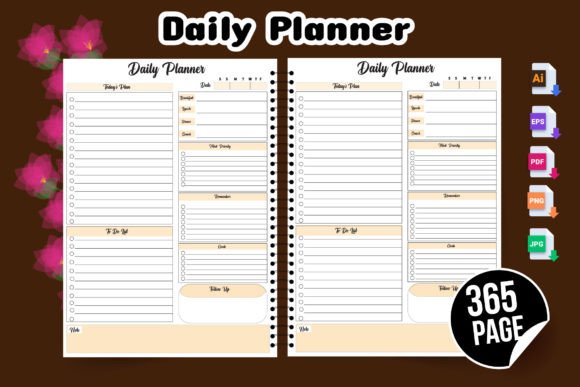
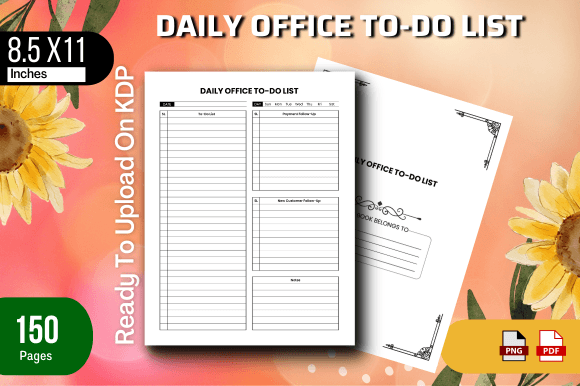
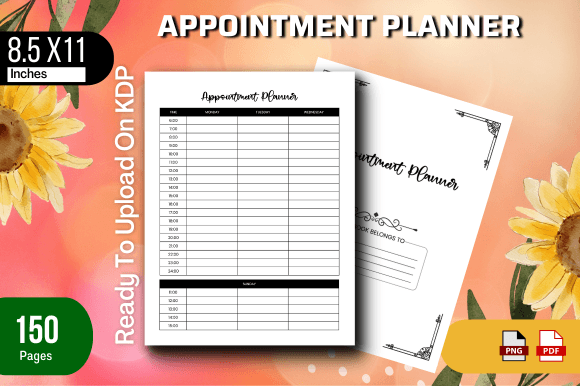
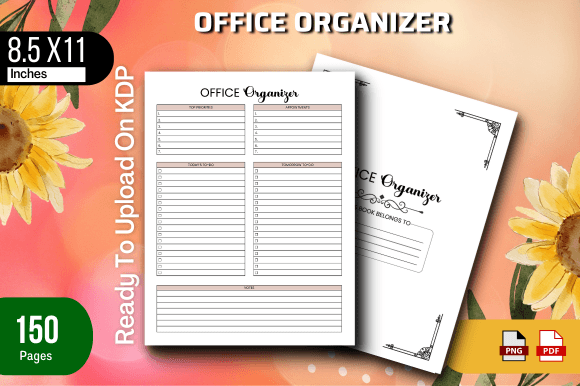
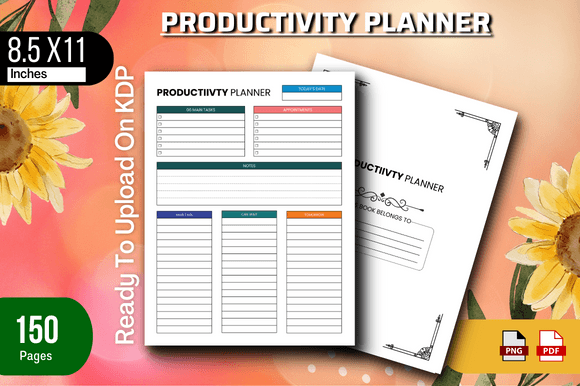
A Productivity Planner KDP Interior is a pre-designed template package intended for authors and entrepreneurs who wish to publish a productivity planner or similar structured journal on Amazon KDP. It is not a physical planner but a digital interior file that serves as the foundation for your book. The typical package, as described in common market listings, includes a ready-to-upload PDF file formatted to the standard 8.5 x 11 inches trim size, comprising 150 total pages. These files are often tested on Amazon KDP to ensure they meet platform specifications and avoid technical rejection. Additionally, a PNG image file, usually a cover mockup or promotional graphic, is frequently included. The core purpose is to provide a complete, structured layout that users can upload directly to KDP after customizing with their own content, branding, and cover design.
Primary Reasons for Interest and Potential Benefits
Individuals might consider a Productivity Planner KDP Interior for several practical reasons. The foremost benefit is time efficiency. Designing a book interior, especially one with complex layouts like daily planners, weekly schedules, goal-tracking pages, and monthly overviews, requires significant effort and design skill. A pre-made template drastically reduces the design and formatting workload.
Another key advantage is technical assurance. Since the files are tested on KDP, users mitigate the risk of upload errors related to margins, bleed, or file structure. This can prevent frustrating delays and revisions during the publishing process.
Finally, it offers a professional baseline. Even for those with minimal graphic design experience, using a well-structured template can result in a polished-looking interior that meets reader expectations for a functional planner, enhancing the perceived value of the final published book.
Tradeoffs and Important Considerations
While the benefits are clear, there are important tradeoffs to weigh. The most significant is limited customization. While you add your text, the fundamental layout, page order, and graphical elements are fixed. If your vision for a productivity planner deviates substantially from the template's structure—for instance, requiring unique page types or a different flow of sections—adapting a rigid template can be more cumbersome than starting from scratch.
There is also the consideration of originality and market saturation. Using a commercially available template means other publishers may be using the same or similar interior design. Your book's uniqueness will depend heavily on your cover design, written content, and additional branding elements within the template.
Furthermore, you must verify the commercial licensing terms. Ensure the template purchase grants you a clear license to use and sell the resulting book commercially on KDP without further obligations.
Situations Where This Interior is a Strong Fit
The Productivity Planner KDP Interior can be an excellent solution under specific circumstances. It is a strong fit for first-time self-publishers who want to launch a planner product but lack design expertise or confidence in KDP's technical requirements. It provides a guided, safe path to publication.
It is also well-suited for entrepreneurs and content creators focusing on speed to market. If your primary goal is to quickly publish a professional tool to support your brand or audience, rather than creating a uniquely artistic layout, the template efficiently serves that objective.
Additionally, it aligns with goals where budget constraints preclude hiring a designer. Compared to the cost of custom design services, a template is a lower-investment starting point that still yields a functional product.
When Alternatives Might Be Worth Considering
There are scenarios where exploring alternatives is prudent. If you possess advanced graphic design skills and software like Adobe InDesign, creating a custom interior from scratch may yield a more distinctive product that perfectly aligns with your creative vision.
For projects requiring highly specialized or innovative layouts not commonly found in template marketplaces—such as planners integrating specific coaching methodologies or niche tracking systems—a custom design is likely necessary.
Another alternative is to use KDP's own tools or simpler software like Microsoft Word or Canva for basic formatting, especially if your planner concept is very simple (e.g., a basic undated weekly notebook). This might be sufficient and offer more granular control over each page, though it requires mastering KDP's guidelines independently.
Practical Decision-Making Insights
To determine if a Productivity Planner KDP Interior aligns with your needs, conduct a simple self-assessment. First, audit your own skills and resources. Honestly evaluate your proficiency with design software and your time availability for learning KDP formatting. If both are low, the template's value increases.
Next, deconstruct your planner concept. List all the page types and sections you want to include. Compare this list meticulously to the template's description and page breakdown. If there is a 80-90% match, it's a viable option. If the match is lower, its utility decreases.
Finally, define your success metrics. Is success defined by publishing a professional product quickly, or by publishing a one-of-a-kind design? If it's the former, the template supports that goal. If it's the latter, it may be a constraint.
Aligning the Product with Your Goals
The decision ultimately hinges on your primary goals for the publishing project. The Productivity Planner KDP Interior serves as a practical tool to overcome technical and design barriers, facilitating entry into the self-publishing market. It excels as a foundation for functionality and professionalism. However, it is not a tool for unbounded creative expression in layout design. By clearly defining whether your project prioritizes efficiency and assurance or customization and uniqueness, you can make a reasoned choice. For many aspiring publisher-authors, such a template represents a balanced compromise, enabling them to focus their energy on creating valuable content and marketing their book, rather than becoming experts in book interior design and KDP file specifications.