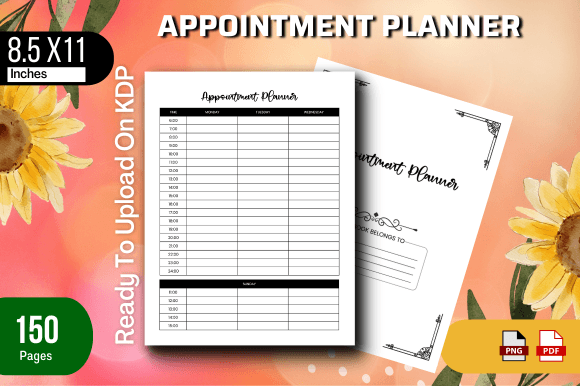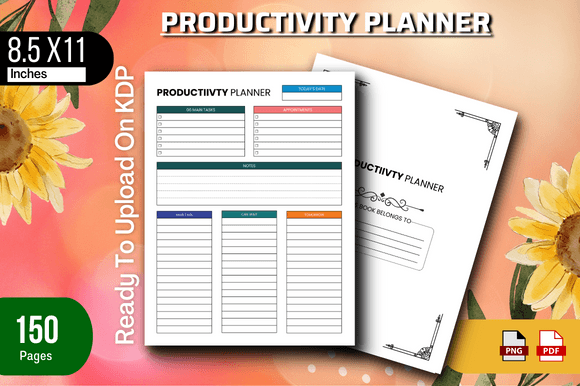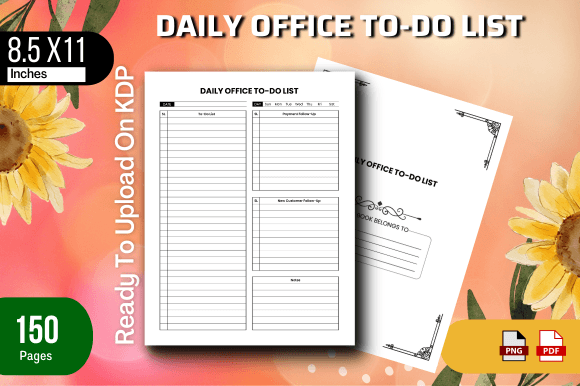
The 365 Page Daily Planner KDP Interior: A Complete, Editable Framework for Your Publishing Workflow
For creators, entrepreneurs, and productivity-minded individuals entering the world of Amazon KDP publishing, the challenge often lies not in the idea, but in the execution. Designing a professional, functional daily planner from scratch requires significant time and design skill—resources that are often diverted from core business activities. The 365 Page Daily Planner KDP Interior solves this foundational problem by providing a fully tested, print-ready, and completely editable template system. It is not merely a product to sell; it is a strategic asset that integrates directly into a publishing workflow, eliminating the most time-consuming phase of product creation and allowing you to focus on branding, marketing, and scaling your business.
Where the 365 Page Daily Planner Template Fits in Your Process
Imagine your workflow for launching a planner on Amazon KDP. The stages typically involve market research, conceptual design, page-by-page layout creation, file formatting for KDP specifications, and finally, cover design and listing. The 365 Page Daily Planner KDP Interior inserts itself at the critical juncture between concept and execution. Instead of spending weeks or months designing 365 individual pages, you begin with a complete, structured interior ready for customization. This shifts your effort from foundational construction to strategic differentiation. You can immediately work on tailoring the design colors, fonts, and subtle layout elements to match your brand or niche audience, a task that requires far less specialized knowledge than building from a blank canvas.
This is particularly potent for targeting the Q3 and Q4 markets. The summer period is ideal for this preparation. By utilizing the editable files, you can adapt the planner’s aesthetic—perhaps opting for warmer tones for autumn or minimalist, crisp layouts for a professional New Year’s release—and have the fully tested files ready for upload well before the peak buying seasons. The template acts as a process accelerator, compressing the development timeline and providing a reliable, quality-controlled base upon which all your variations can be built.
Integration with Tools, Resources, and Platforms
The provided file suite is designed for seamless interaction with standard design software and the Amazon KDP platform. The inclusion of an AI file and EPS file means you can open the template in Adobe Illustrator or similar vector-based editing programs. Even with limited knowledge, you can change element colors or swap fonts using these standard tools. The 365 individual PDF, PNG, and JPG files serve multiple roles in your workflow.
For KDP Publishing
The PDF files are formatted to the required 8.5″ x 11″ inch dimensions and are already high-resolution. They are fully tested on KDP, meaning the margins, bleed (if any), and page order meet Amazon’s strict requirements. This integration eliminates the common, frustrating step of file validation and rejection. You simply add your custom cover PDF to this interior PDF set, and your book file is ready for listing. This compatibility is a core component of the template’s value, ensuring your technical preparation is error-free.
For Marketing and Proofing
The 365 PNG and JPG files, each representing a single day’s page, are ready-to-use assets for your marketing workflow. You can easily extract specific pages to showcase the planner’s layout on your website, social media, or in advertising materials. They are also perfect for creating “look inside” previews or assembling sample PDFs for potential customers. This interaction with your marketing toolkit simplifies content creation and provides authentic visuals directly from the product.
Practical Implementation and Workflow Examples
Adopting this template into your routine requires a clear, practical approach. Here is how different users might integrate it.
For a freelance graphic designer starting a side-business in niche planners, the workflow is streamlined. After purchasing the ZIP file, they open the AI file in Illustrator. Using their existing skills, they swiftly change the color palette to match a specific theme (e.g., botanical, academic) and select a font pair that enhances readability. They then export the new version as a PDF, combine it with a cover they designed, and upload to KDP. Their primary creative effort was focused on unique branding and cover design, not on drawing 365 page grids.
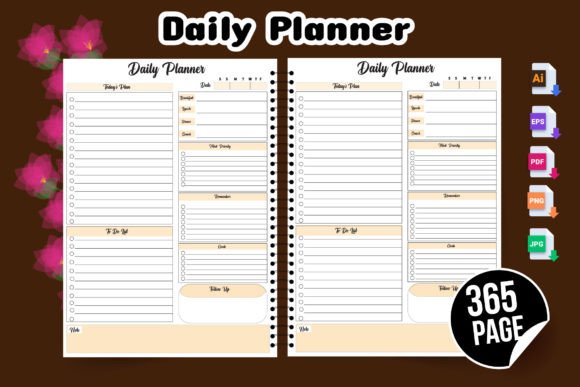
For an entrepreneur or blogger with minimal design experience, the process leverages the more accessible files. They might use the provided PDFs directly if the default design suits their audience. Alternatively, they could use a simpler tool to modify the JPG or PNG files for basic color adjustments before compiling them. The key is that the structural work—the layout of date sections, task lists, notes areas, and monthly overviews—is already done and optimized. Their workflow centers on curation and assembly rather than creation.
A small publishing house looking to scale its planner line can use the template as a consistent base. They can create multiple planner variants—a productivity edition, a wellness edition, a business edition—by systematically applying different color schemes and fonts to the same core AI or EPS file. This ensures uniformity in quality and page functionality across their catalog while drastically reducing production time per new title. It becomes a reusable resource in their ongoing business workflow.
Factors for Long-Term Use and Efficiency
The long-term value of the 365 Page Daily Planner KDP Interior lies in its role as a consistent, organized framework. Once you are familiar with its structure, you can produce new planners with remarkable efficiency. The preparation is minimal; you are working from a known, reliable starting point. This consistency also aids in quality control. Every planner you generate from this base will have the same professional layout and print-ready resolution, building trust with your customers.
Usability extends to physical production. The “instant print at your home” capability, facilitated by the high-resolution PDFs, means you can also use the files for direct personal use or for small-batch, non-KDP sales. For educators or coaches, printing specific daily pages for workshop materials is straightforward. The template’s utility is not locked solely to the Amazon ecosystem; it is a source of printable daily pages for a wide array of applications.
Organization of the files themselves is logical. Having a separate file for each day (in PDF, PNG, and JPG formats) might seem extensive, but it provides granular control. You can remove or rearrange pages if needed for a different page count product, though the 365-day structure is complete. This organization supports both the standard full-year planner and the potential for creating hybrid products, like quarterly planners, by selecting relevant page groups.
Final Observations for Smooth Integration
To integrate this template smoothly, start by auditing your own capabilities and goals. If you are adept with Illustrator, lean on the AI and EPS files for deep customization. If your focus is speed and simplicity, the PDFs are your go-to. Before any modification, print a test page from the PDF to verify the look and feel on paper—this is a crucial step in the practical implementation process. Finally, always remember that this interior is designed to pair with your unique cover. Your workflow should culminate in a cover design that complements the interior’s style, creating a cohesive, market-ready product.
The 365 Page Daily Planner KDP Interior is more than a digital download; it is a foundational component in a pragmatic publishing process. It bridges the gap between concept and market-ready product, interacts cleanly with professional tools and platforms, and provides a scalable base for long-term business growth. By adopting this ready-made framework, you redirect your energy from arduous page design to the strategic work of branding, marketing, and building your planner business, precisely when the Q3 and Q4 opportunity windows demand agility and speed.