Your ADHD Management Toolkit: The Editable ADHD Mental Health Journal KDP
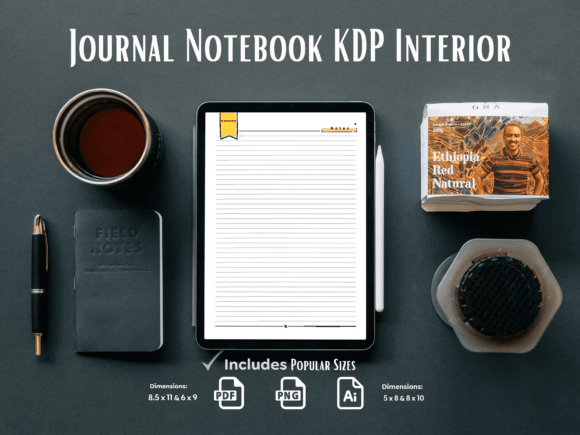
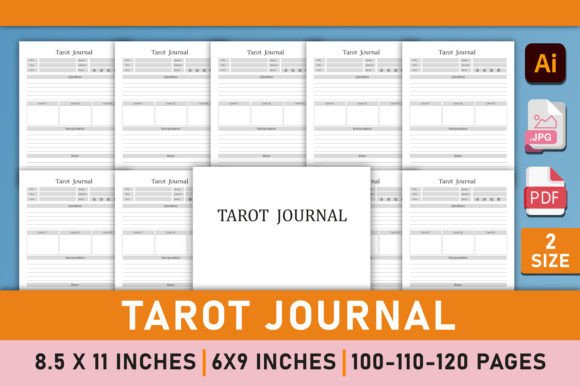
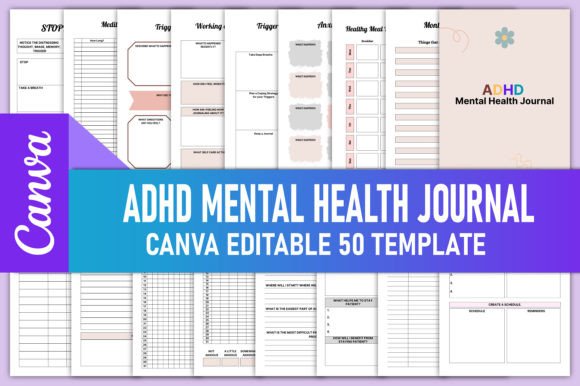
Imagine a journal that doesn’t just sit blank on your desk, waiting for you to muster the focus to fill it. Instead, imagine a structured, ready-to-use system designed specifically for the ADHD mind—a collection of pages that guide you through tracking moods, planning tasks, managing triggers, and celebrating small wins, all in one place. That’s the core idea behind the Editable ADHD Mental Health Journal KDP. It’s more than a notebook; it’s a pre-built framework for mental organization, available as high-quality, print-ready PDF files ready for Amazon KDP, or as editable Canva templates you can tailor to your exact needs.
Why a Structured Journal Makes a Difference for ADHD
For many adults with ADHD, traditional journaling can feel overwhelming. Where do you start? What do you track? The open page becomes a source of anxiety rather than a tool for clarity. The Editable ADHD Mental Health Journal KDP solves this by providing a starting point. It takes the common challenges—task initiation, emotional regulation, habit consistency—and translates them into practical, fill-in-the-blank formats. You’re not inventing a system from scratch; you’re engaging with a proven one.
Consider a typical Tuesday morning. You have a looming project deadline, a doctor’s appointment later that week, and you’re feeling a familiar, low-grade anxiety that makes everything seem harder. Instead of letting those thoughts swirl, you open the journal. You might first visit the Daily Planner to block out the next two hours for focused work. Then, you glance at the STOPP Worksheet, a cognitive-behavioral tool, to pause and reframe the anxious thoughts about the deadline. Before diving in, you quickly note your current mood on the Mood Tracker. This sequence isn’t random; it’s a deliberate practice of externalizing your internal state, making it manageable. The journal acts as an external brain, holding the structure so your mind can focus on the content.
Real-World Applications Across Different Lives
The utility of the Editable ADHD Mental Health Journal KDP stretches far beyond personal use. Its editable nature, through the provided Canva link, makes it a versatile asset for creators, coaches, and professionals.
For the Individual: A Personal Management Hub
A freelance graphic designer uses the Weekly Priorities and Distraction Tracker pages together. She lists her three main client deliverables for the week, then uses the tracker to note when and why she gets pulled off task—often by social media or household chores. Over a month, patterns emerge, and she uses the Monthly Reflection to plan specific interventions, like using a website blocker during deep work sessions. The Habit Tracker helps her cement a new routine of a ten-minute morning meditation, using the Reward Chart to celebrate a full week of completion.
For Therapists and Coaches: A Customizable Client Resource
A mental health coach specializing in ADHD buys the editable Canva template. For each client, she customizes the journal. With one client who struggles with anger management, she emphasizes the Trigger Processing and Anger Management sections, maybe even duplicating those pages. For a client focused on health, she might bring the Exercise Log, Sleep Tracker, and Healthy Meal Planner to the forefront. She then provides the personalized PDF as part of her coaching package, offering a tangible tool that extends her support between sessions.
For KDP Publishers and Entrepreneurs: A Ready-to-Sell Product
An entrepreneur on Amazon KDP looking to niche down into the mental health space finds the print-ready PDF files a perfect solution. They don’t need design skills; they receive a professionally laid-out interior file that’s already optimized with pages like Symptoms Tracker, Anxiety Journal, and Annual Goals. They can focus on crafting the cover, writing the description, and marketing. The journal becomes a product that serves a growing audience seeking ADHD-friendly tools, with no upfront design time required.
Key Features Connected to Daily Outcomes
The value is in how the features translate into real-life stability. Let’s break down a few.
The Focus Plan page isn’t just a title; it’s a prompt to define your one main objective, identify potential distractions beforehand, and choose a specific reward for completion. This turns an abstract “need to work” into a concrete game plan. The Put Things Back Where They Belong sheet might seem simple, but for someone whose ADHD manifests in physical clutter leading to mental overwhelm, tracking this habit can reduce daily friction and stress.
The Trigger Tracking and Working on Your Triggers sections work in tandem. First, you identify what spikes your anxiety or disrupts your focus—a certain email, a crowded room, a particular time of day. Then, you proactively develop coping strategies using the Trigger Coping Cards. This moves you from passive reaction to active management.
And the tracking pages—for mood, gratitude, water, sleep—serve a vital purpose: they provide data. ADHD can make self-assessment fuzzy. Was this a good month? Am I getting better sleep? A visual log offers objective evidence, helping you see progress where your memory might only recall struggles.
What to Consider Before Using or Purchasing
The Editable ADHD Mental Health Journal KDP is a tool, and its effectiveness depends on how it’s used. Think about your primary goal. Are you seeking a personal aid? Then the print-ready PDF might be perfect. Do you want to adapt it, change colors, add your own logo, or merge pages? The editable Canva template is the necessary choice. Canva’s free platform is user-friendly, but basic familiarity with it will help you customize efficiently.
Also, reflect on your engagement style. Some people thrive with a comprehensive, all-in-one journal. Others might feel pressured by its breadth. The beauty of the editable version is you can remove sections that don’t serve you right now. Start with the Daily Planner, Mood Tracker, and To-Do List. Add the Anxiety Tracker or Monthly Calendar later as your practice deepens. The journal is meant to support you, not burden you.
For KDP publishers, assess the market. The journal interiors are ready, but success will hinge on your packaging—the cover design, title, and Amazon listing—and your understanding of the ADHD community’s needs. Highlight the specific pages like the STOPP Worksheet or Therapy Notes in your description, as these are direct solutions to common challenges.
Integrating the Journal into Your Existing Systems
This journal doesn’t have to replace your digital tools. It can complement them. You might use a digital calendar for appointments but use the journal’s Weekly Planner for deeper weekly intention-setting and the Priority pages for goal breakdown. The Thought Log can be where you unpack complex emotions after a triggering event, something a quick digital note might not capture.
The physical act of writing in the Editable ADHD Mental Health Journal KDP can also be therapeutic. It slows down your thinking, helps process information more deeply, and creates a physical artifact of your journey. For the entrepreneur, it’s a product. For the therapist, it’s a resource. For the individual managing ADHD, it can be a cornerstone of their daily routine—a dedicated space to build patience, track progress, and ultimately, understand their own mind better.