The Complete Guide to Choosing and Customizing Daily Gratitude Journal Canva KDP Interiors
For many seeking to create a personal gratitude journal or produce one for commercial sale, the journey often begins with a search for a high-quality, adaptable interior template. The Daily Gratitude Journal Canva KDP and its associated template kits represent a specific category of digital product designed to bridge the gap between a blank page and a finished, professional-looking journal. Understanding what these offerings entail, how they compare to other approaches, and where their strengths and limitations lie is crucial for making an informed decision that aligns with your goals.
Understanding the Daily Gratitude Journal Canva KDP Offering
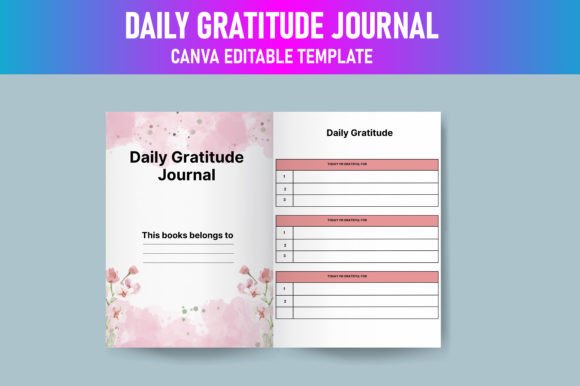
At its core, a Daily Gratitude Journal Canva KDP product is a bundle of digital files and an editable design link intended for the creation of gratitude journal interiors. These are not physical books, but the digital building blocks used to create them. The typical package includes high-resolution JPG and PNG files, print-ready PDFs, and an editable Canva link. The interior is pre-formatted to popular dimensions like 8.5" x 11", tested for Amazon Kindle Direct Publishing (KDP) compatibility, and set with technical specifications such as CMYK color and 300 PPI resolution. The key distinction is the editable Canva link, which grants the user permission to modify the template within the Canva design platform.
Comparing Approaches to Gratitude Journal Creation
When considering how to produce a gratitude journal, several paths exist, each with its own set of tradeoffs. The Daily Gratitude Journal Canva KDP template sits between two common extremes: designing entirely from scratch and purchasing a fully fixed, non-editable PDF.
Full Custom Design from Scratch
Starting with a blank canvas in a design software like Adobe InDesign, Affinity Publisher, or even Canva itself offers maximum creative freedom. You control every element, from page layout to font choice to graphic placement. This approach is ideal for those with strong design skills, a unique vision, and the time to execute it. However, the time investment is significant, and achieving a professionally polished result requires a good understanding of print design principles, typography, and KDP’s technical requirements. For someone without these skills or who prioritizes speed, this path can be daunting and inefficient.
Fixed, Non-Editable PDF Interiors
Many marketplaces sell finished PDF interiors that are ready to upload to KDP. These are often inexpensive and guarantee a certain design quality. The primary tradeoff is rigidity. You cannot change the fonts, colors, layout, or content to better suit your personal preferences or brand. If the template has a "Belongs To" page with a style you dislike, or you wish to add a specific prompt, you are locked out. This option fits someone who finds a design they love exactly as-is and has no need for customization.
The Hybrid Model: Editable Canva Templates
The Daily Gratitude Journal Canva KDP model is a hybrid. It provides a substantial starting point—a 120-page structured journal with dedicated gratitude pages, a consistent layout, and tested technical specs—while offering the key benefit of customization through the editable Canva link. This balances efficiency with flexibility. You are not building the foundation, but you can repaint the walls and rearrange the furniture. It significantly lowers the skill barrier compared to full custom design, as Canva is a user-friendly, drag-and-drop tool. The tradeoff is that your customization is confined within the capabilities of Canva and the existing template structure. You cannot, for example, easily alter the fundamental page architecture if it’s built as a single image background.
Evaluating the Strengths and Key Features
A well-structured Daily Gratitude Journal Canva Template KDP Interior brings several practical strengths to a project. The provision of multiple file formats (JPG, PNG, PDF) serves different purposes. The high-quality PDFs are for immediate printing or KDP upload, while the image files allow for further manipulation in other software if needed. The "KDP Tested" claim addresses a common concern for sellers, potentially reducing the risk of upload errors related to bleed, margins, or color space.
The inclusion of an editable Canva link is the most significant feature. It transforms the product from a static item into a dynamic tool. This allows you to:
- Personalize text, such as changing the title on the "Belongs To" page or modifying daily prompts.
- Adjust colors to match a personal or brand palette.
- Replace or add graphics and illustrations.
- Re-order pages or duplicate sections to create a longer journal.
This flexibility makes the template suitable for a wider range of use cases, from a one-off personal journal to a commercial product you intend to sell under your own brand.
Limitations and Decision Factors to Consider
While the editable template model is powerful, its limitations help define when it might not be the right choice. Customization is bound by Canva’s functionality. Complex typographic adjustments, advanced layout controls, or automatic page numbering might be harder to achieve. The template’s starting design quality is paramount; if the original aesthetics, font choices, or page balance are not to your taste, even with editing, you may find yourself making extensive changes that approach a from-scratch project.
A crucial technical note is the specification "Without bleed area." This means the design is suited for interiors where no content extends to the very edge of the page, typical for journals without full-page background images. If your vision requires a full-bleed design, this template type would be a mismatch. Furthermore, the 8.5" x 11" size is popular but not universal. If you require a different trim size, you would need to either find a template specifically for that size or face the complex task of resizing everything yourself.
When This Template is the Right Fit
The Daily Gratitude Journal Canva KDP approach is likely an excellent fit if you value a balance of quality, speed, and moderate customization. It suits:
- Individuals creating a personalized gratitude journal for themselves or as a gift, who want a professional base but wish to insert their name or favorite colors.
- Aspiring KDP sellers who have a niche idea for a gratitude journal but lack the design skills or time to build every page from zero.
- Coaches, counselors, or small brands wanting to produce a branded journal for clients, where changing the title and adding a logo is essential.
- Anyone who prefers working within the intuitive Canva environment over more complex professional design software.
When You Might Need Another Option
You may need to explore alternatives if your requirements fall outside the template’s scope. Consider a full custom design project or hiring a designer if:
- You have a highly unique, complex layout concept that the template framework cannot accommodate.
- You require a different trim size (like 6" x 9") or a full-bleed design.
- You possess advanced design skills and see the template as more of a constraint than a starting point.
- The aesthetic of available templates does not align with your vision, and you’d prefer to invest in a completely original design.
Conversely, if you find a fixed PDF interior that perfectly matches your needs with no alterations desired, that simpler, often lower-cost option could be the most efficient choice.
Making Practical Use of the Template
To realistically leverage an editable template, following the provided note—"Make sure you make a copy in your own account of the document and work on that one"—is vital. This preserves the original link for the seller and ensures your edits are safe in your Canva workspace. Practical customization might start with simple text swaps, then progress to color changes using Canva’s color picker tool. You could use the provided PNG files of individual elements (like decorative borders) to rearrange them on pages. The 120-page count provides a substantial foundation, but if designing a 30-day journal, you might delete pages; for a 365-day journal, you would duplicate and re-sequence sections.
The "high quality print ready pdf files" are the final output for printing, whether for home use, office use, or KDP upload. It’s wise to do a test print of a few pages locally before committing to a large print run or publishing, to verify colors and alignment match your expectations after any customization.
Ultimately, products like the Daily Gratitude Journal Canva Template KDP Interiors serve as a powerful tool in a specific niche. They democratize the creation of professional-looking printed materials by providing a tested, editable foundation. By carefully weighing your need for customization against your design skill and time, and by understanding the technical specifications like size and bleed, you can determine if this hybrid model is the optimal resource for your gratitude journal project, or if a different path—from full control to a fixed solution—better serves your goals.