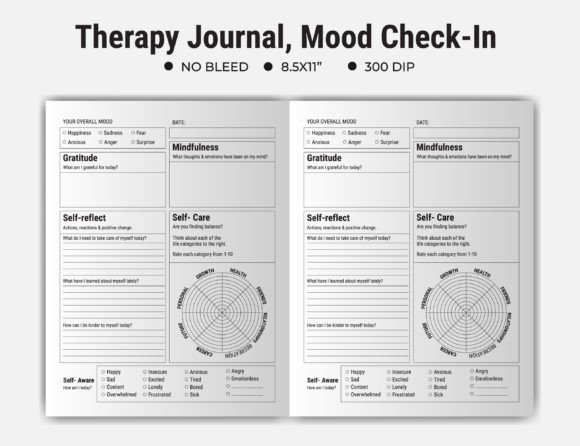
The Transformative Power of a Therapy Journal with Mood Check-In
In the journey toward mental wellness, tools that provide structure and clarity can be invaluable. Among these, the practice of journaling has long been a cornerstone of therapeutic self-reflection. A dedicated therapy journal, especially one integrated with a structured mood check-in feature, moves beyond simple diary entries to become a powerful instrument for understanding, managing, and improving one's mental health. This article explores the purpose, significance, and practical application of such a journal, explaining how this accessible tool fits seamlessly into modern daily life to foster emotional resilience.
What is a Therapy Journal with Mood Check-In?
At its core, a therapy journal is a purposeful notebook designed to facilitate the process of emotional and psychological self-exploration. Unlike a generic diary, it often includes guided prompts, specific trackers, and structured sections that encourage users to delve deeper into their thoughts, feelings, and behaviors. The integration of a daily "mood check-in" is a key component. This is a dedicated space—often a simple rating scale, a list of emotional descriptors, or a brief narrative box—where individuals consciously record their prevailing emotional state at a specific moment, typically once or twice per day.
This combination transforms the journal from a passive record into an active therapeutic aid. The mood check-in acts as an anchor point, a consistent snapshot of emotional weather. Over time, these daily snapshots create a data-rich log that, when reviewed alongside the more free-form journaling prompted by questions, reveals patterns, triggers, and progress that might otherwise remain invisible.
The Significance and Purpose: Beyond Just Writing
The significance of this practice lies in its dual function: awareness and agency. First, it cultivates acute self-awareness. Many of us move through our days on an emotional autopilot, reacting to stimuli without fully grasping the underlying currents. The simple act of stopping to name your mood—"anxious," "calm," "frustrated," "hopeful"—forces a moment of recognition. It brings subconscious feelings to the conscious level.
Second, it grants agency. By tracking moods alongside daily activities (via integrated habit trackers, sleep logs, or activity trackers), individuals begin to see correlations. You might discover that your "low" mood check-ins consistently follow poor sleep nights logged in your sleep tracker, or that your "energized" states correlate with days you completed a certain activity. This knowledge is empowering; it shifts mental health from being a nebulous force to a series of observable factors that you can potentially influence.
A common misunderstanding is that such journals are only for those in formal therapy or with severe diagnoses. In reality, they are a proactive tool for anyone invested in their emotional well-being, akin to a gratitude journal or a physical health daily planner. They serve preventative care, helping manage everyday stress, anxiety, and the ups and downs of modern life.
Practical Relevance in Modern Daily Life
In our fast-paced, digitally saturated world, moments of introspection are often lost. A structured therapy journal carves out a deliberate space for this introspection, fitting into daily routines like any other health practice. Its practical relevance is multifaceted:
- For Stress and Anxiety Management: Regular check-ins can defuse anxiety by breaking it down into measurable, daily occurrences rather than an overwhelming monolithic feeling. An integrated anxiety tracker can help quantify intensity, making it easier to discuss with a professional or apply coping techniques.
- For Tracking Therapeutic Progress: For those in counseling or using self-help strategies, the journal provides tangible evidence of progress or stagnation, which is especially useful for conditions like depression. A depression tracker section can illustrate the gradual lifting of a low mood period, offering hope and objective feedback.
- For Enhancing Self-Care Routines: When combined with a self-care log or medication tracker, the mood check-in data shows the direct impact of these actions on your emotional state, reinforcing positive habits and adherence to health regimens.
- For Creative and Professional Life: Emotional clarity fosters creativity and professional effectiveness. Understanding your mood patterns can help you schedule demanding tasks during your typically "focused" periods and creative brainstorming during your "open" periods, as logged in your journal.
How a Well-Designed Journal Facilitates This Practice
The utility of a therapy journal is greatly enhanced by thoughtful design. A print-ready, high-quality interior—such as one featuring 120 pages with unique prompts, clean trackers, and a logical layout—removes the barrier of "having to create the structure yourself." It provides a ready-made framework that users can immediately engage with.
Key components of an effective interior include:
- Unique Journal Prompts: These guided questions move users beyond surface-level writing. Prompts might ask, "What event today contributed most to my checked-in mood?" or "What is one small evidence against my current anxious thought?" They stimulate cognitive reframing and deeper insight.
- Consistent Mood Check-In Sections: Placed at the start of each daily or weekly entry, this section should be easy and quick to complete, encouraging consistency.
- Integrated Trackers: Dedicated pages for habit tracking, appointment logs, gratitude lists, and inspiration allow all relevant mental health data to coexist, enabling cross-referencing and pattern recognition.
- Flexible and Editable Formats: Having the journal available as a printable PDF or a physical book accommodates different user preferences. Some may prefer the tactile experience of pen on paper, while others might value the ability to edit a digital PDF for personalization.
Building a Broader Understanding: The Journal as a Diagnostic Companion
To build a broader understanding, it's helpful to view the therapy journal not as a replacement for professional care, but as a complementary diagnostic companion. In sessions with a therapist, the journal provides concrete data—"Here's what my mood was each day last month; here's how my sleep correlated"—moving the conversation from subjective summary to objective discussion. This aligns perfectly with modern, evidence-based therapeutic approaches.
Furthermore, the practice democratizes mental health management. With resources like these readily available as KDP interiors or printables, individuals gain access to a professional-grade tool without a prohibitive cost. It supports the growing cultural movement toward proactive mental health care, where tools like manifestations journals, gratitude journals, and mood diaries are recognized as valid components of a holistic wellness toolkit.
Examples of natural integration into life include a student using it to manage academic stress, noting that mood dips follow all-night study sessions; a remote worker tracking mood alongside social interaction to combat isolation; or a person managing a chronic condition using the medication tracker and mood check-in to observe the emotional side-effects of treatment.
Clarifying Common Assumptions
A few common assumptions need clarification. First, that journaling requires lengthy, time-consuming entries. A structured therapy journal with check-ins is designed for efficiency; the mood check-in can take seconds, and even a brief response to a prompt is valuable. Second, that it's solely for "bad" moods. The journal is equally important for capturing positive states, understanding their origins, and learning how to cultivate them more often. Finally, that it's a one-size-fits-all solution. The best journals offer flexibility—they are editable and adaptable—so users can emphasize the trackers or prompts most relevant to their personal journey, be it focused on depression therapy, anxiety management, or general self-care.
Conclusion: An Accessible Path to Emotional Clarity
In conclusion, a therapy journal with a built-in mood check-in is more than a book; it's a system for engaging with your own inner life with more curiosity and less fear. It provides the structure needed to transform vague feelings into understandable patterns, granting individuals a greater sense of control and insight over their mental and emotional well-being. By fitting seamlessly into daily routines as a practical, educational, and engaging tool, it represents a significant step forward in making sophisticated mental health management accessible to all. Whether used as a standalone practice or alongside professional therapy, it empowers users to not only check in on their mood each day but to genuinely understand it, fostering a lasting foundation for emotional resilience and health.