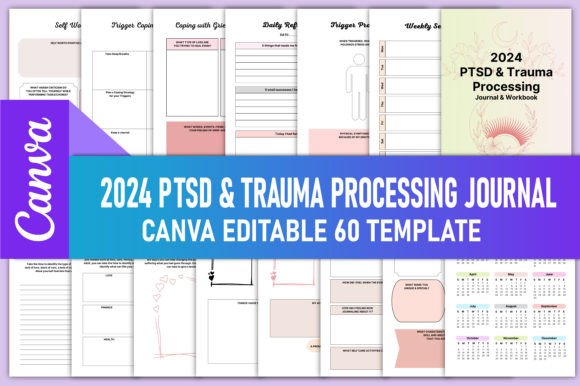
The 2024 PTSD Trauma Processing Journal: A Path to Healing
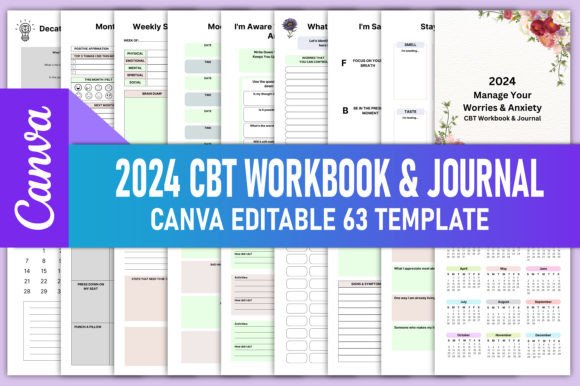
Navigating the journey of trauma recovery requires more than just intention; it demands a structured, compassionate, and actionable framework. The 2024 PTSD Trauma Processing Journal provides exactly that. This isn’t merely a notebook; it is a comprehensive, editable workbook designed as a Canva template for KDP interiors, offering a guided path toward healing and self-awareness. Its purpose is deeply practical, transforming the often-chaotic process of trauma work into a series of manageable, reflective steps.
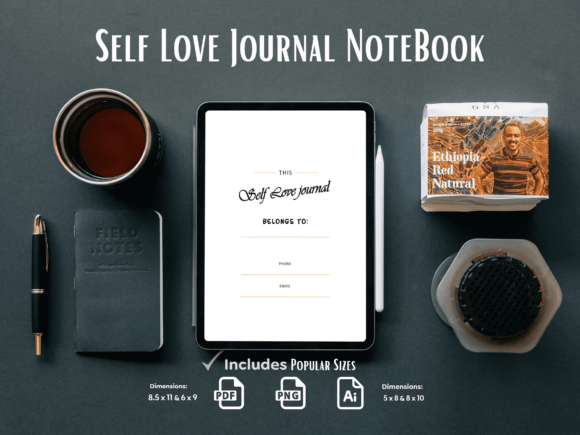
Conceptually, the journal’s personality is one of gentle authority and supportive clarity. Its style is clean, organized, and intentionally modular, allowing users to focus without overwhelming visual distraction. The overall appeal lies in its dual nature: it is a professional, print-ready tool for creators and a deeply personal resource for end-users. The editable Canva link means designers, publishers, and entrepreneurs can customize every element—from the “Specifications Belongs To” page to the intricate worksheets—to fit specific audiences or therapeutic approaches. You receive high-quality PDF files ready for Amazon KDP, making it a turnkey product for small business owners in the self-help or mental wellness niche.
A Structured Approach for Real-World Healing
The journal’s content is its core strength. It moves systematically from foundational awareness to proactive growth. Starting with concepts like “Trigger Processing” and “Working on Patterns,” it helps users build the crucial skill of learning to respond, not react. The powerful reminder, “I’m aware that my thoughts are not me,” is woven into exercises that facilitate cognitive distancing. Modules like “Heal Your Inner Child in 7 Steps” and the “Trauma Worksheet Experience Breakdown” offer structured introspection.
This is followed by practical sections on “Self-Blame,” “Working on Your Triggers,” and fostering “Self-Acceptance” and “Self-Compassion.” It addresses specific challenges like “Processing Nightmares” and “Coping with Grief and Loss” with tailored tools like “Trigger Coping Cards” and “Daily Reflection” prompts. The journal then guides users toward proactive management and future-building, with sections on “Weekly Self-Care,” “Anger Management,” “Overcoming Fear,” and “Self-Love.” Techniques like “Decatastrophizing” and “Discover My Authentic Self” are included, alongside physical coping skills and exercises like “Hearth Breathing” and “The Balloon Mental Exercise.” Finally, it empowers forward vision through “Building My Dream Life,” “My Vision Board,” “Monthly Reflections,” and “Monthly Goal Planning.” This progression mirrors a genuine therapeutic journey, making it a valuable design asset for anyone creating content in the wellness space.
Applications for Creators and Entrepreneurs
For the target audience—designers, marketers, bloggers, publishers, and content creators—this journal template is a versatile product with multiple applications. Its primary use is, of course, as a finished journal for sale on platforms like Amazon KDP. The provided editable Canva link is a significant advantage, allowing for complete customization. You can adjust the color palette, modify the wording to suit a particular sub-niche (e.g., grief-specific journals), or even integrate your own brand identity elements for a series of publications.
Beyond a standalone product, elements from the workbook can be repurposed. The individual worksheets, such as the “Anger Management” or “Worry Coping Cards” sections, could be extracted as single-page printables for a blog or subscription service. The structure serves as excellent inspiration for editorial design in related articles, books, or online courses. For social media graphics, the clear, segmented concepts provide ready-made content pillars for an educational series on trauma recovery. The template’s organization inherently teaches about visual hierarchy and information flow, which are critical in any web design or packaging design for self-help products.
Ensuring Professionalism and Audience Engagement
Using a tool like this for commercial projects directly influences brand perception and audience engagement. A well-designed, coherent journal signals professionalism and deep understanding of the reader’s needs. The consistency of the layout across dozens of pages creates a trusted, reliable experience. This fosters reader loyalty and recognition—if you publish a series of journals using this adaptable template, your audience will come to associate its clear structure with your brand.
Readability is paramount in material dealing with sensitive topics. The template’s design presumably emphasizes clean, legible modern typography (whether a serif or sans-serif typeface) and ample white space to prevent cognitive overload. When customizing, you must consider these readability considerations: font size, line spacing, and the balance between instructive text and blank space for user writing. The emotional weight of the content requires a visual presentation that is calm and accessible.
Practical Guidance for Customization and Use
Before diving into customization, take time to evaluate the project fit. Ask yourself: Is my target audience likely to engage with this depth of material? Would a simpler, more focused version be more effective? Review all included styles and pages thoroughly. The provided modules like “Self Worth” and “Physical Coping Skills” are a menu; you don’t have to use every one. Curate the sequence to match the healing narrative you want to promote.
When testing font pairings for any headings or instructional text you add, aim for harmony and legibility. If the base template uses a clean sans-serif, a complementary serif for titles might add warmth. Avoid overly decorative or handwritten fonts for body text, as they can compromise readability. Remember, the journal is a functional tool; its creative font elements should serve clarity first.
Finally, understand the commercial licensing implicitly provided with the editable Canva template. Typically, such templates grant the purchaser the right to create and sell derivative works. Confirm this explicitly to ensure your use—whether for a single KDP journal or a series of digital printables—is fully covered. This makes the 2024 PTSD Trauma Processing Journal template a true commercial font of ideas and structure, a premium foundation upon which you can build your own unique, helpful products for an audience seeking genuine healing and growth.
Beyond the Template: Observing Real Needs
The true value of this journal concept lies in its response to a real-world need. Trauma processing is nonlinear and complex. By offering a structured, editable framework, it gives creators the ability to package that complexity into a navigable path. For the end-user, it transforms abstract therapeutic concepts into daily, actionable steps. Whether you are a publisher looking to expand your catalog into the wellness market, a blogger creating supplemental resources for your readers, or a therapist designing tools for your clients, this template provides a robust, adaptable starting point. Its emphasis on moving from “Trigger Processing” to “Building My Dream Life” encapsulates the entire journey from pain to possibility, making it a profoundly useful tool in both logo design for a healing brand and in the hands of someone working toward their own recovery.